
%20(1).png?width=1948&name=Well%20Diagram%20-%20Top%20Hole%20Section%20(without%20CTS)%20(1).png)
Case Study:
Accurate formation limit testing with Controlled Mud Level
Accurate formation limit testing is essential for defining the safe drilling window and protecting formation integrity. Conventional methods often rely on indirect pressure changes, which can make it difficult to detect the exact formation limit and may lead to pressure overshoot.
This case demonstrates how Controlled Mud Level (CML) with EC-Drill® enables a controlled and continuous pressure ramp during a Leak-Off Test (LOT). By applying a constant delta flow, the riser level and bottom-hole pressure increase linearly, allowing the formation limit to be detected as it occurs.
In the test presented, the LOT value was identified at 11.2 ppg at the shoe, with a maximum applied pressure of 11.25 ppg. The formation limit was detected in 18 minutes, before changes in flow could be observed.
The results show how EC-Drill® improves formation limit testing by enabling more precise drilling window definition while minimizing pressure overshoot and reducing the risk of formation damage..
The Challenge
Accurate identification of formation pressure limits is critical for maintaining well integrity, ensuring optimal well design, and enabling safe drilling operations. Operators require high confidence in defining the drilling window while minimizing the risk of formation damage.
Key challenges include:
- Accurate formation limit identification
- Reducing the risk of formation damage
- Achieving high confidence when defining the drilling window
Background
Accurate determination of formation pressure limits is essential for safe and efficient drilling operations.
Conventional formation limit testing methods are widely used, but they have inherent limitations.
In conventional tests:
- Pressure is increased indirectly through compression
- Detection relies on interpretation of pressure trends
- Tests often continue until the formation limit is exceeded
Surface Back Pressure (SBP) improves formation limit testing by enabling pressure manipulation during circulation. In these operations, pressure is controlled using choke adjustments based on flow measurements. Pressure is typically increased in discrete steps to conduct the test.
Controlled Mud Level approach
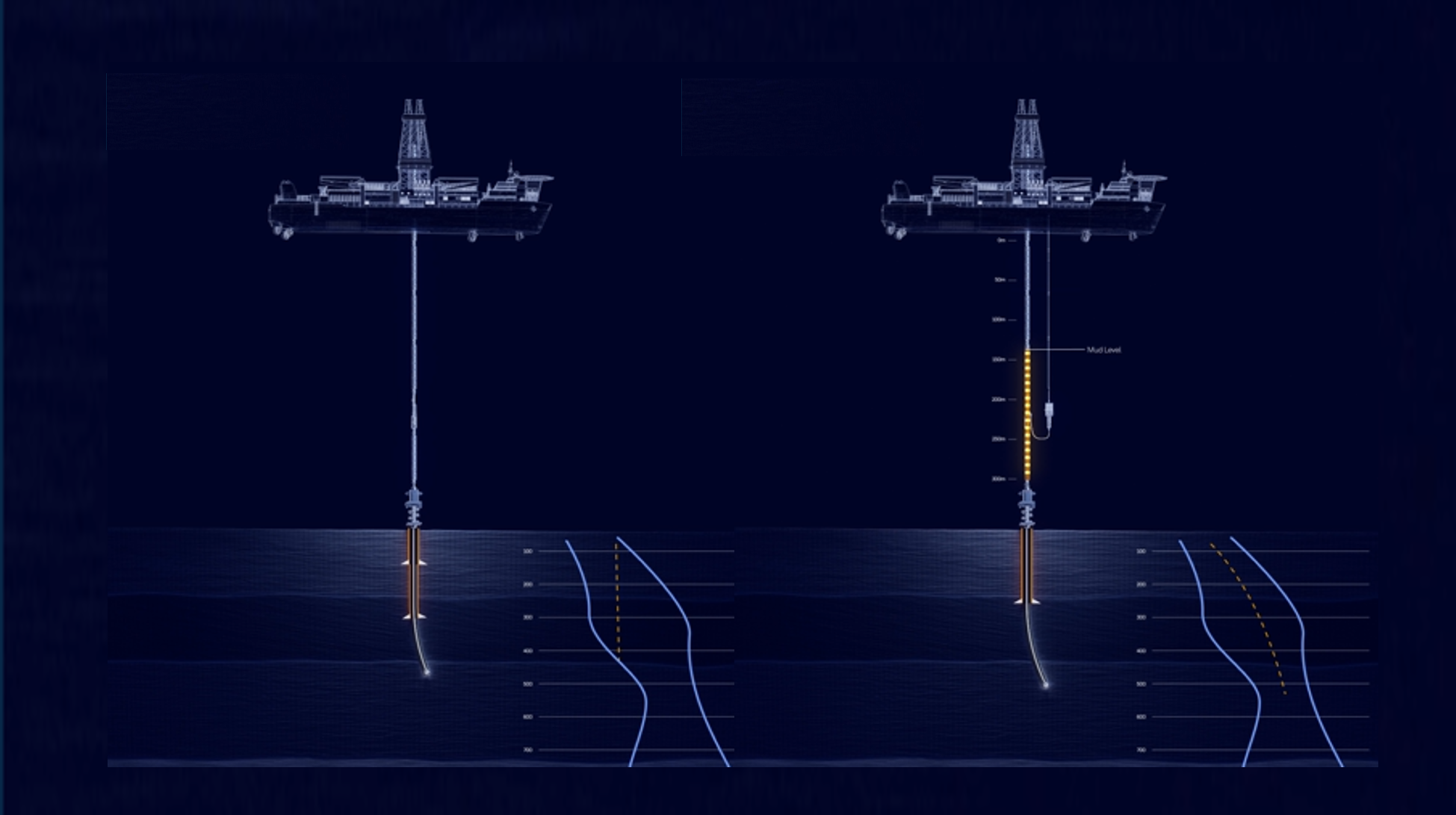
Controlled Mud Level (CML) introduces a different approach by using the riser level itself as both the pressure manipulation mechanism and the primary detection signal.
By applying a deliberate, constant, non-zero delta flow, the riser level – and therefore the bottom-hole pressure – changes at a controlled and predictable rate.
Any deviation from this linear trend indicates the onset of losses or influx. This allows the formation limit to be detected at the moment it is reached rather than after it has been exceeded.
This approach enables:
- Continuous and high-resolution pressure ramps
- Reduced sensitivity to flow meter noise and choke fluctuations
- Improved stability during testing
The same principle can be applied across several formation limit tests, including: Leak-Off Tests (LOT) Formation Integrity Tests (FIT) Pore Pressure Tests No-Flow Tests Following a leak-off event, recovery pressure can be determined by resetting delta flow to zero and observing riser level stabilization.
This provides insight into formation behaviour while minimizing formation damage.
How EC-Drill® Controlled Mud Level Works
EC-Drill® manages bottom hole pressure by controlling the fluid level inside the riser.
By adjusting the riser fluid level, the system can:
- Reduce static bottom hole pressure
- Compensate for circulating friction in washpipe and annulus
- Offset hydrostatic pressure variations
- Maintain constant toe pressure during pumping
This dynamic control is essential during Open Hole Gravel Pack operations, particularly during alpha and beta wave placement.
Learn more about EC-Drill® Controlled Mud Level
Case example: Dynamic Leak-Off Test
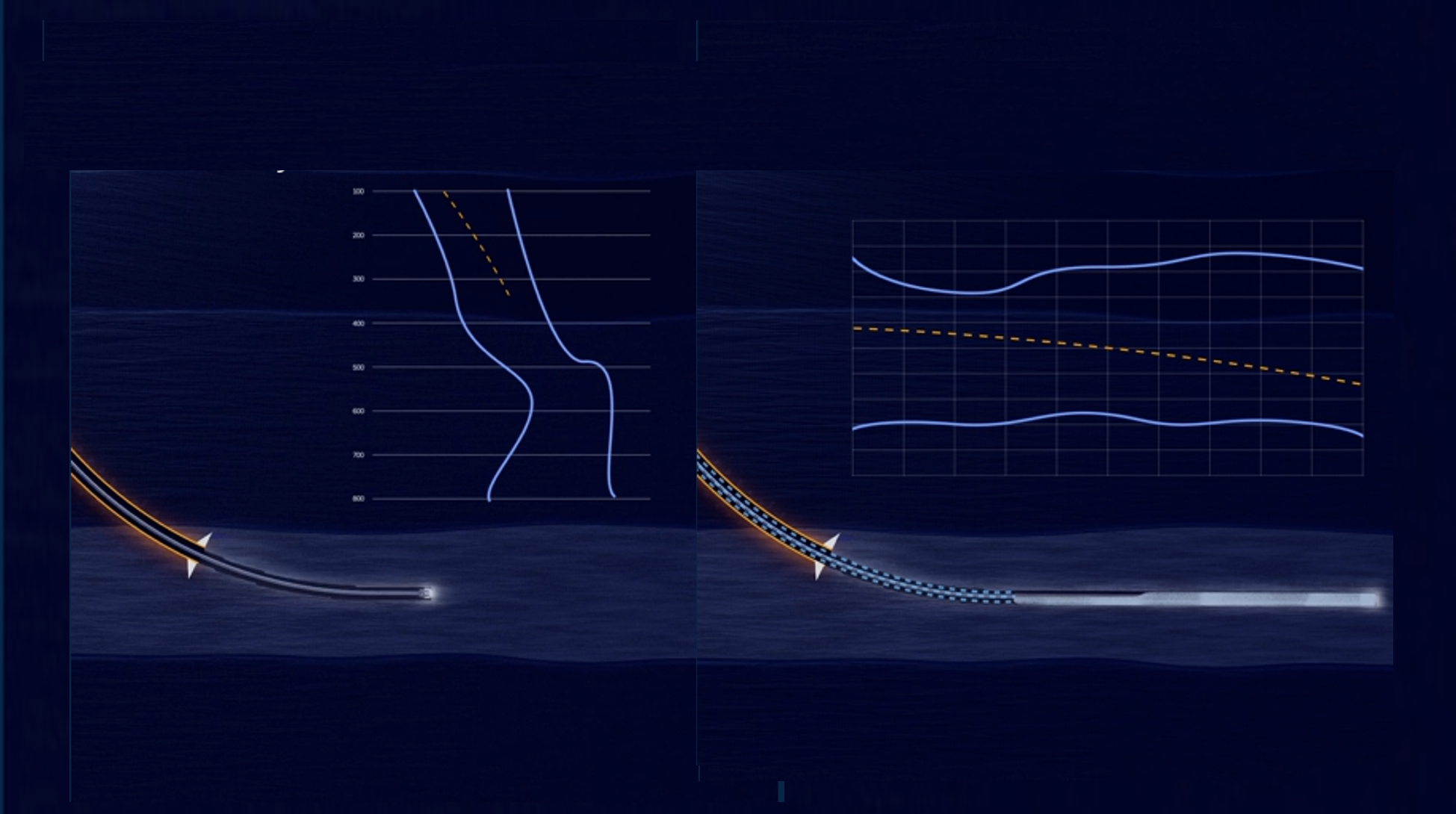
In the example shown in the plot belove, the drilling margin was defined through a dynamic Leak-Off Test conducted by applying a constant riser pressure increase.
A deliberate, constant, non-zero delta flow was applied, causing the riser level – and therefore bottom-hole pressure – to increase at a controlled linear rate.
This created a smooth and continuous pressure ramp rather than the discrete pressure steps often associated with choke-controlled testing.
When the well reached its formation limit, the riser pressure dropped, as shown in the plot (blue curve).

This provided a Leak-Off Test (LOT) value of 11.2 ppg at the shoe.
During the test:
- Maximum pressure exerted at the shoe was 11.25 ppg
- The confirmed LOT value occurred before it could be detected through changes in flow
- The total time required to obtain the LOT value was 18 minutes
Additional reading: EC-Drill® Enables Gravel Packing Without Inducing Losses
Conclusion
The case demonstrates how EC-Drill® with Controlled Mud Level can improve formation limit testing by providing a controlled and predictable pressure ramp.
Key observations from the test include:
- Improved accuracy when determining the operating window
- Reduced pressure overshoot, helping to minimize formation damage
- Controlled and predictable pressure increase during the test
- Efficient test execution with LOT obtained in 18 minutes
These results demonstrate how EC-Drill® can enhance formation limit testing and provide improved confidence when defining drilling margins.
Related Resources
Discuss your drilling challenges with our team
Formation limit testing and pressure management are critical to defining a safe and efficient drilling window. If you would like to learn more about how EC-Drill® and Controlled Mud Level can support your operations, our team is ready to help. Get in touch with our drilling specialists to discuss your well design, testing strategy, or upcoming drilling campaigns.
Contact us to start the conversation.