
%20(1).png?width=1948&name=Well%20Diagram%20-%20Top%20Hole%20Section%20(without%20CTS)%20(1).png)
Case Study:
EC-Drill® Drilling and Completing the Undrillable for Major Operator
Last updated: 23 March 2026
Enabling Production in an Ultra-Narrow Pressure Window with EC-Drill®
Four horizontal Open Hole Gravel Packs (OHGP) were successfully executed in deepwater Gulf of Mexico using EC-Drill® Controlled Mud Level (CML) Managed Pressure Drilling technology.
The project was completed in one of the tightest pressure windows ever managed for horizontal gravel packing operations, with a pore pressure to fracture gradient margin of only 0.1–0.3 ppg.
The result:
- Four successful OHGP completions
- Zero non-productive time during pumping
- Solids-free production at expected rates
- Water-based mud used throughout drilling and completion
This project represents the world’s first Managed Pressure Horizontal Open Hole Gravel Pack.
Executive Summary
- Location: Deepwater Gulf of Mexico
- Water Depth: 7,500–10,000 ft (2,290–3,050 m)
- Reservoir Type: Unconsolidated, highly compressible sand
- Pressure Margin: 0.1–0.3 ppg (0.83–2.5 sg)
- Technology Used: EC-Drill® CML MPD + lightweight proppant
Outcome: Successful gravel packing of four horizontal open holes without losses. EC-Drill® enabled dynamic bottom hole pressure control during drilling and gravel packing, allowing operations within an extremely narrow pore pressure and fracture gradient window.
The Challenge: Gravel Packing in a 0.1–0.3 ppg Pressure Window
Deepwater Reservoir Complexity
The field lies in the deepwater Gulf of Mexico, in water depths between 7,500 and 10,000 ft.
The geology is characterized by:
- A shallow stacked fan lobe and channel sequence
- Reservoirs located 1,000–3,000 ft below seabed
- Very unconsolidated and highly compressible sands
These conditions increase the sensitivity to pressure variations.
0.1–0.3 ppg Between Pore Pressure and Fracture Gradient
The target reservoir had an extremely tight margin between pore pressure and fracture gradient, ranging from 0.1 to 0.3 ppg.
This narrow operating window was caused by shallow burial and faulting in the target zone.
In such conditions:
- Slight increases in bottom hole pressure risk fracturing the formation
- Slight decreases risk influx
- Conventional gravel packing methods cannot reliably maintain pressure within limits
Figure 1: Pore Pressure, Possible Loss Line and Fracture Gradient
The plot below shows pore pressure (PP), fracture gradient (FG), and the Possible Loss Line across measured depth.
The minimal spacing between these curves demonstrates how limited the safe operating window was during drilling and gravel packing.
Figure 1: Pore Pressure (PP), Possible Loss Line, and Fracture Gradient in the project field illustrating the ultra-narrow pressure window.
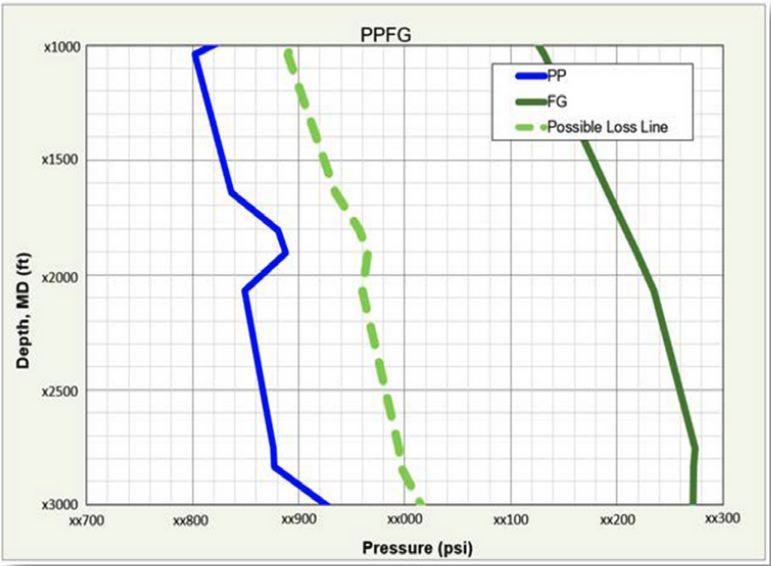
Maintaining bottom hole pressure between pore pressure and the Possible Loss Line was critical to avoid losses or formation damage.
Horizontal Open Hole Gravel Packs were selected due to their predicted high productivity and reliability. However, the narrow margin meant that conventional execution posed unacceptable risk.
Gravel packing the horizontal sections was identified as a critical success factor for the entire field development.
Watch webinar: World's First Managed Pressure Open Hole Gravel Pack
The Solution: EC-Drill®
A concept selection study was conducted to evaluate how gravel packs could be safely executed within this narrow window.
The study identified two enabling technologies:
- EC-Drill®
- Specially developed lightweight proppant
How EC-Drill® Works
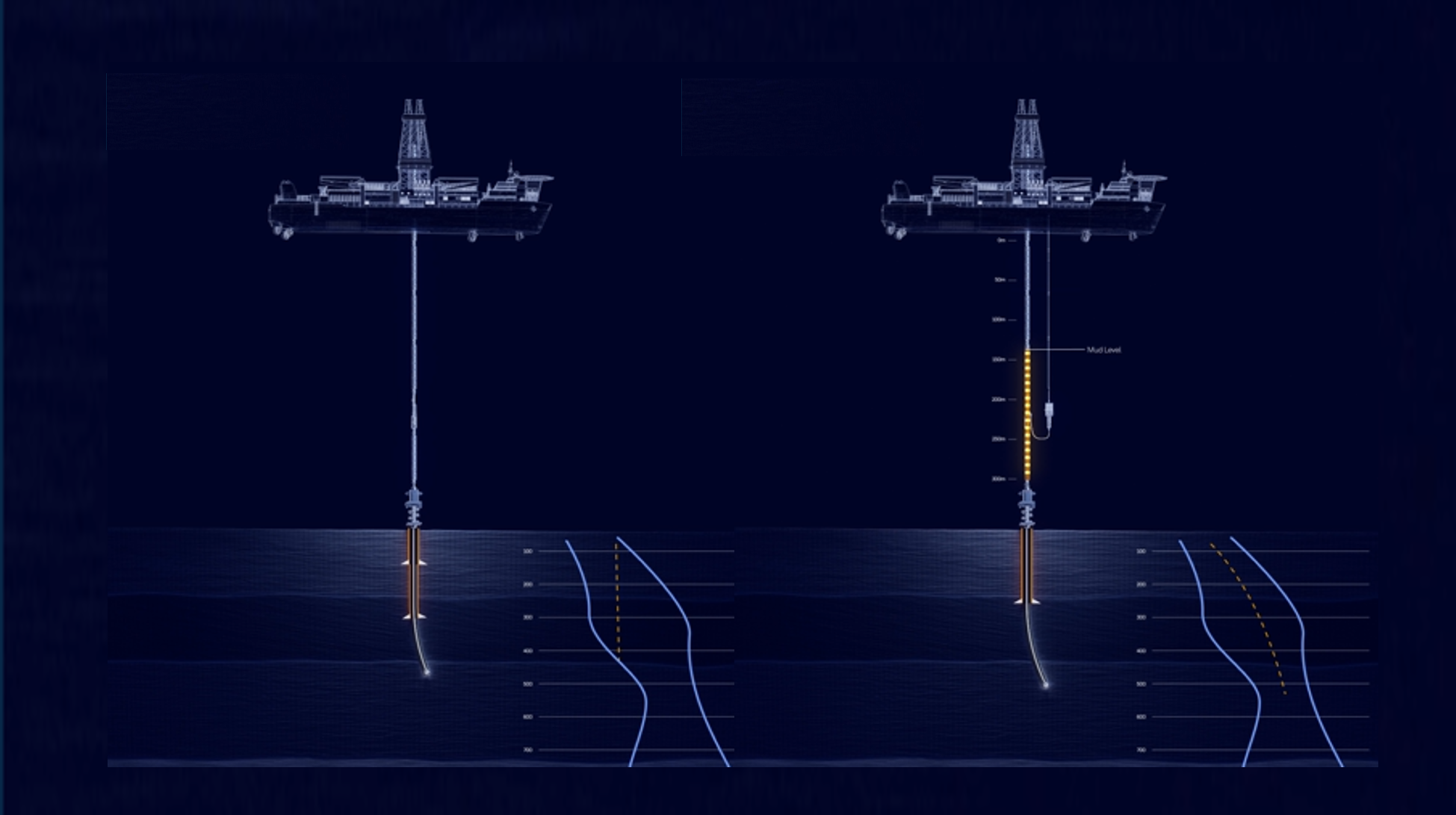
EC-Drill® manages bottom hole pressure by controlling the fluid level inside the riser.
By adjusting the riser fluid level, the system can:
- Adjust bottom hole pressure
- Compensate for circulating friction in washpipe and annulus
- Offset hydrostatic pressure variations
- Maintain constant toe pressure during pumping
This dynamic control is used during Open Hole Gravel Pack operations, particularly during alpha and beta wave placement.
Explore: EC-Drill® Dual MPD – Superior Pressure Control
Pressure Profile Comparison:
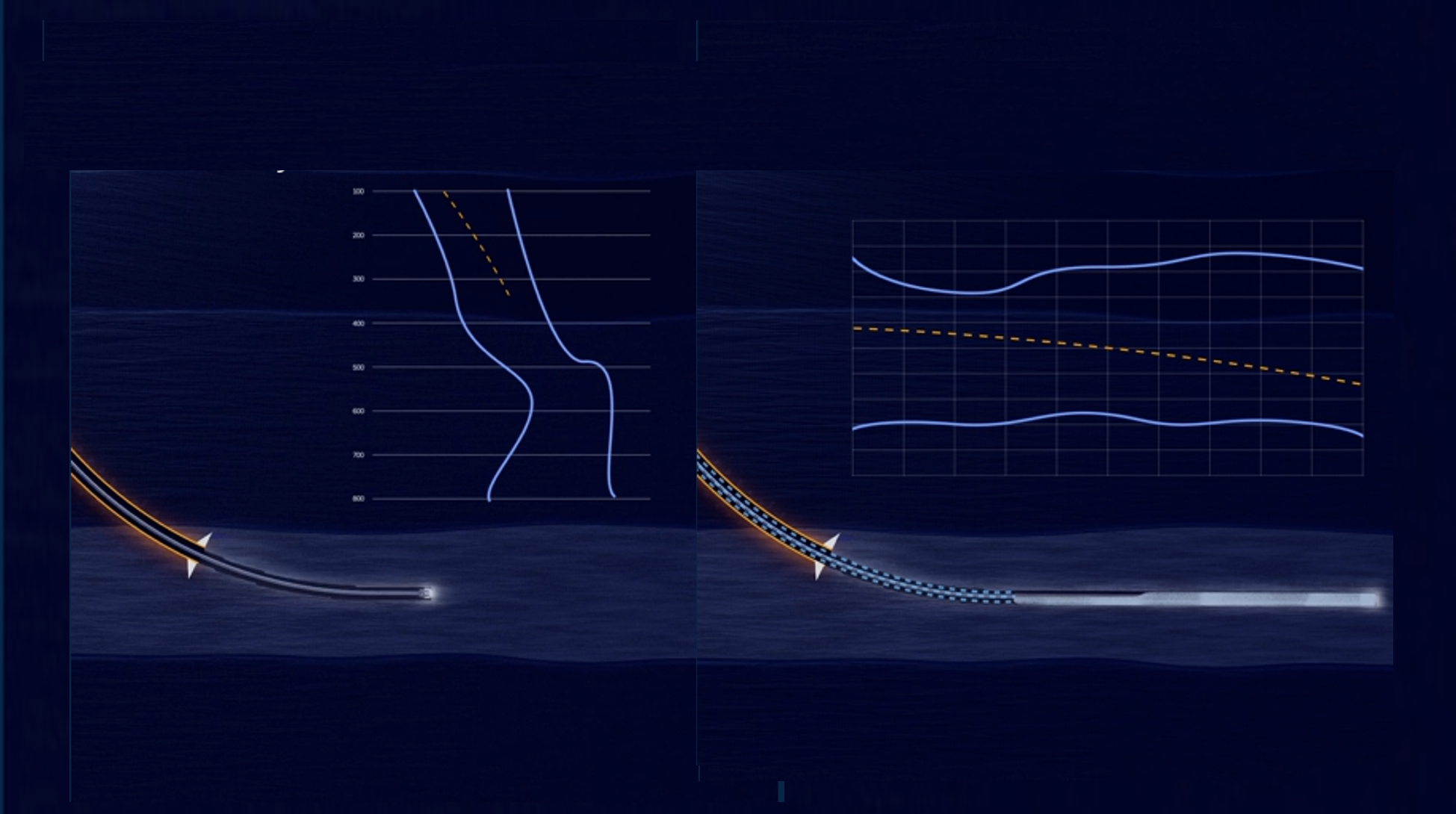
Conventional vs. CML-Controlled: The illustration below (fig. 2) demonstrates how EC-Drill® shifts both static and dynamic pressure profiles downward compared to conventional methods.
Figure 2: Pressure Profiles During OHGP with EC-Drill®
The diagram compares:
- Conventional static and dynamic pressures
- CML-controlled static and dynamic pressures
- Pore pressure and Fracture pressure
Figure 2: Illustration of pressure profiles during Open Hole Gravel Pack (OHGP) comparing conventional dynamic pressure with EC-Drill®.
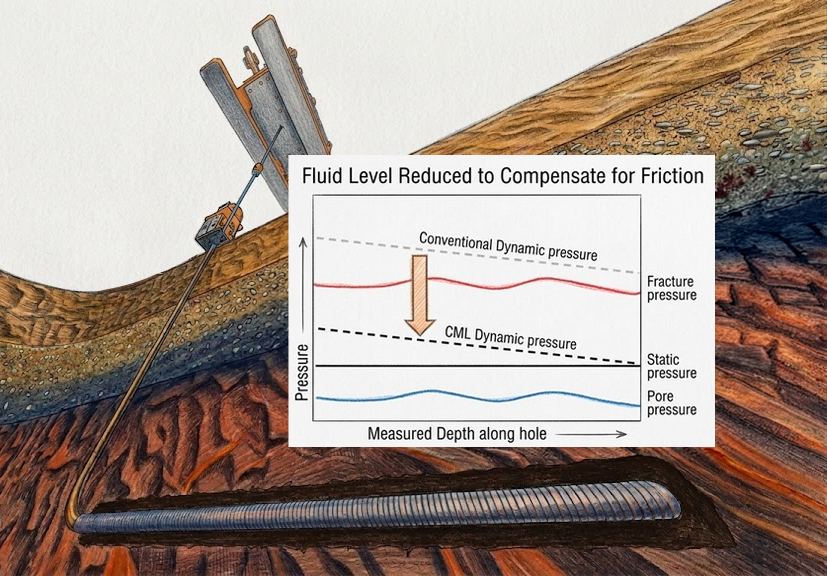
With conventional methods, dynamic pressure approaches fracture pressure during pumping.
With EC-Drill®:
- Static pressure is reduced
- Dynamic pressure is compensated
- Bottom hole pressure remains within the narrow operating window
This allowed the operator to maintain pressure safely between pore pressure and fracture pressure throughout the gravel packing operation.
Additional reading: EC-Drill® Enables Gravel Packing Without Inducing Losses
Lightweight Proppant as an Enabler
Analysis showed that conventional-weight proppant would generate excessive flowing friction in open hole.
A special lightweight proppant was therefore developed specifically for this application.
When combined with EC-Drill®:
- Friction pressure was reduced
- Circulating pressure stayed within limits
- Gravel packs could be placed without inducing losses
EC-Drill® was also used during drilling of the horizontal section to reduce bottom hole pressure and compensate for fluid friction.
Enabling the Use of Water-Based Mud
The pressure compensation capability of EC-Drill® enabled the operator to drill the horizontal section using water-based mud instead of oil-based mud.
Operational benefits:
- Simplified drilling and completion workflow
- Eliminated need for post-pack treatment or breaker
- Reduced operational complexity
- Improved environmental profile
Results: Four Successful Managed Pressure OHGP Operations
The operator successfully executed four horizontal Open Hole Gravel Packs in the challenging deepwater reservoir.
Operational outcomes included:
- Zero non-productive time during pumping
- Full compliance with the operator’s safety processes
- Stable pressure control throughout placement
These operations represent the world’s first Managed Pressure Horizontal Open Hole Gravel Pack using EC-Drill®.
Learn more: EC-Drill® Managed Pressure Drilling Technology
Production Confirmation
Production results confirmed:
- Solids-free production
- Expected production rates
- No formation damage
The gravel pack integrity was validated through sustained production performance.
What This Means for Deepwater Operators
This case shows that EC-Drill® expands the feasible operating envelope for:
- Managed Pressure Drilling in ultra-narrow margins
- Open Hole Gravel Pack completions
- Deepwater unconsolidated reservoirs
By enabling dynamic bottom hole pressure control, EC-Drill® allows operators to:
- Execute wells previously considered undrillable
- Reduce loss risk
- Improve gravel placement quality
- Simplify fluid systems
- Protect production integrity
For wells where conventional MPD is insufficient, enhanced pressure control solutions such as EC-Drill® provide a pathway to predictable and safe execution.
Key Takeaways
- Horizontal Open Hole Gravel Pack executed in 0.1–0.3 ppg window
- EC-Drill® enabled precise control of static and dynamic pressures
- Four successful OHGP completions
- Water-based mud used for full drilling and completion
- Solids-free production confirmed
- Zero non-productive time during pumping
Related Resources
Discuss Your Well Challenges
Do you have a reservoir with a narrow pore pressure and fracture gradient margin?
Our deepwater specialists can evaluate whether Managed Pressure Open Hole Gravel Pack with EC-Drill® is suitable for your well.
Contact us to discuss your project.